
Rooflights are glazed roof openings that bring free, natural daylight into a building from above - and on a large flat roof they deliver far more usable light than windows in the walls ever could.
Classified Skylights
Made to Measure
U-Values (W/m²K)
Supports Sustainability
AWAK manufactures polycarbonate and acrylic flat-roof skylights for warehouses, production halls, logistics centres and commercial buildings, in sizes from 60 × 60 cm up to 200 × 300 cm. Made to measure and classified to EN 1873, they cut daytime lighting costs, improve working conditions and support daylighting targets under schemes such as BREEAM and LEED.
We offer fixed rooflights for pure daylighting and opening (ventilating) rooflights that also provide natural air changes. Covers can be specified as multiwall polycarbonate, single- or multi-skin domes, or the Broof(t1)/NRO-classified Kera Fire Protect panel, with U-values from 1.1 to 2.5 W/m²K depending on the build-up.
Ideal Application Environments:
Warehouses, production halls, logistics centres and commercial buildings — the large-footprint spaces where high-performance natural daylighting and thermal efficiency are specified.
Available in fixed versions that provide additional lighting and in openable (ventilation) versions, tailored to individual design requirements.
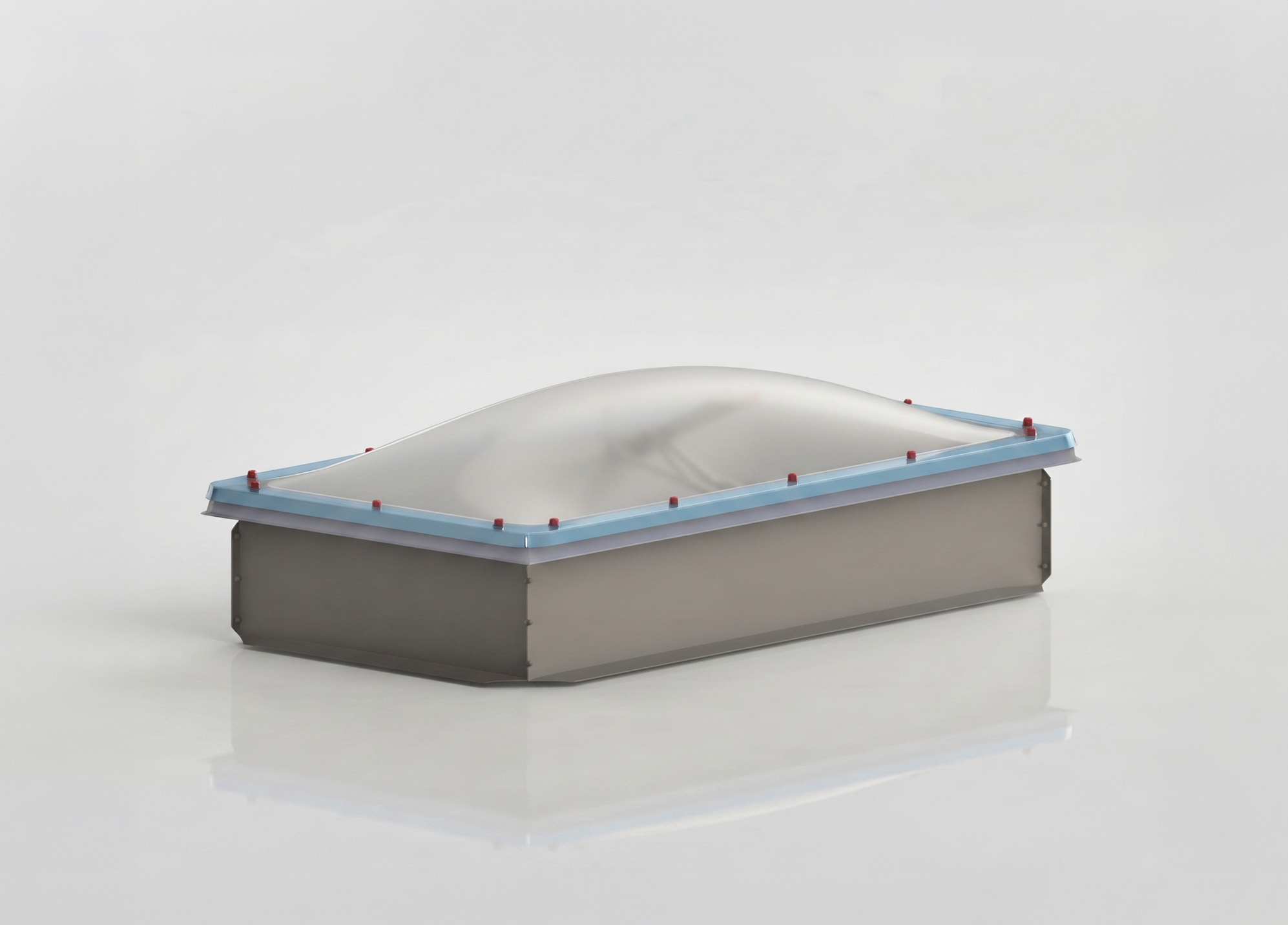
Sealed, non-opening flat roof skylights that flood large interiors with even, glare-controlled daylight - the most economical way to daylight a warehouse or production hall.
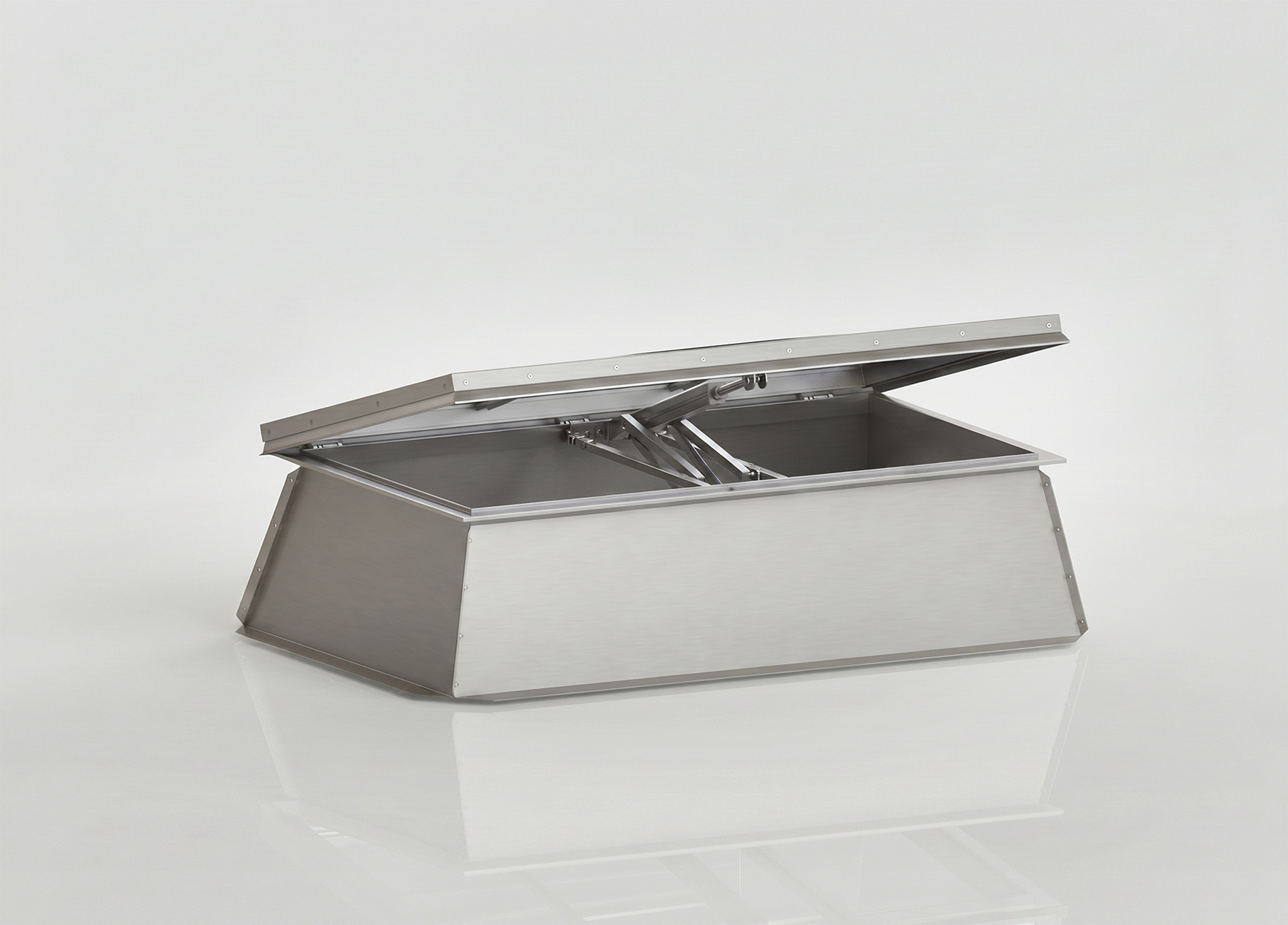
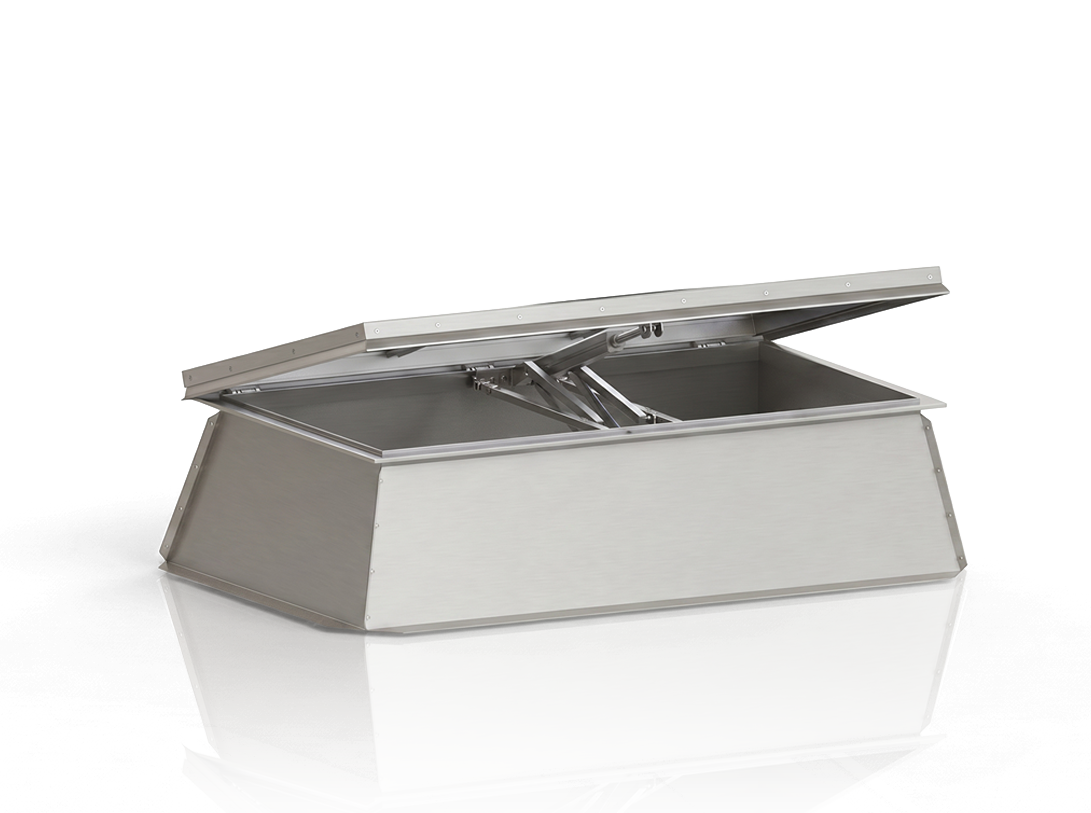
Electrically operated rooflights that tilt open for natural, economical ventilation as well as daylight, driven by a 230 V actuator with a 300 or 500 mm stroke (tandem drives for large units).
The main benefit of rooflights is that they replace purchased electric light with free daylight during working hours, cutting a building’s lighting energy use and its running costs. In a deep-plan warehouse or production hall, roof-mounted daylighting reaches the floor far more effectively than wall windows, so fewer luminaires need to run through the day. Alongside the direct energy saving, good daylight is consistently linked to better visibility, comfort and productivity for the people working beneath it.
Less reliance on artificial lighting during daylight hours, and less heat gain from luminaires.
Natural light improves visual comfort and wellbeing on the floor.
Daylighting supports BREEAM, LEED and similar assessments.
Helps meet minimum daylight provisions in workplace and building regulations.
Daylight keeps working during a power outage.
Choosing a rooflight comes down to five decisions: the cover material, fixed versus opening, the U-value, the light transmission, and the external fire classification.
Each is driven by the building and its roof, and our technical team can advise on the right combination.
Multiwall polycarbonate (tough, light, impact-resistant), acrylic/polycarbonate domes, or the Broof(t1)/NRO Kera Fire Protect panel. Add a Solar Control coating to limit summer heat gain.
Fixed for pure daylight; opening (ventilating) where natural air changes are also wanted.
From 1.1 to 2.5 W/m²K depending on cover and base; lower is better for energy.
Clear covers maximise daylight; opal (diffusing) covers spread it evenly and cut glare.
Classified DL 750 (downward load to 750 N/m²), UL 1500 (upward/wind uplift to 1500 N/m²) and SB 300–1200 (soft-body impact, 300–1200 J).
For large industrial and commercial roofs, polycarbonate and acrylic rooflights are usually the better choice over glass - they are far lighter, effectively unbreakable under impact, and safer overhead. AWAK specialises in polycarbonate and acrylic covers for exactly these reasons: multiwall polycarbonate weighs a fraction of equivalent glass, so it suits long spans and large openings without heavy support; it withstands hail and foot traffic during maintenance; and, unlike glass, it will not shatter onto the floor below. Multiwall constructions also build in insulating air chambers, and a diffusing opal cover spreads daylight more evenly across a working floor than clear glazing. Where an external fire rating is required, the Kera Fire Protect panel achieves Broof(t1)/NRO.
AWAK rooflights are engineered specifically for the large flat and low-pitch roofs of industrial buildings, where they are laid out in a regular grid to daylight the whole floor area evenly.
Because each unit is made to measure - from 60 × 60 cm to 200 × 300 cm - the grid can be tuned to the structural bay and the target daylight factor. Specified as warehouse skylights, commercial skylights or industrial rooflights, typical applications include:
even daylight over racking and picking aisles.
good light on the workface, all day.
large roof areas daylit economically.
With insulated, hygienic detailing.
daylight for large-volume interiors.
Optional extras include an internal anti-fall safety grille, an insect mesh for ventilating units, and RAL-colour painting of the upstand.
Everything you need to know about rooflight specifications, performance, and sizing.
For large industrial and commercial roofs, usually yes. Polycarbonate (and acrylic) rooflights are much lighter, highly impact-resistant and will not shatter, which makes them safer overhead and easier to span across big openings. AWAK manufactures polycarbonate and acrylic covers, with a Broof(t1)/NRO panel option where an external fire rating is required.
From 60 × 60 cm up to 200 × 300 cm, all built to order. Larger areas are daylit by arranging units in a grid, or by using continuous rooflights (light bands) - see the Continuous Rooflights category.
Yes. Opening (ventilating) rooflights use a 230 V electric actuator with a 300 or 500 mm stroke to tilt the cover for natural air changes; large units use a tandem-actuator arrangement. Where fire smoke ventilation is required, a certified smoke vent should be specified instead.
By replacing electric light with daylight during working hours, rooflights cut lighting energy use and the associated cost and heat gain. The saving depends on the daylight area, the cover’s light transmission and how the lighting is controlled; daylight-linked lighting controls make the most of it.
Between 1.1 and 2.5 W/m²K, depending on the cover (e.g. multiwall polycarbonate thickness) and the base build-up. Lower U-values are achieved with thicker multiwall covers and insulated upstands.
Get expert advice - and a made-to-measure quote - from our team.