
Mechanical (powered) ventilation uses fans to move air where natural, buoyancy-driven ventilation cannot do the job - and in fire safety it means mechanical smoke extraction that actively drives smoke and heat out of a building.
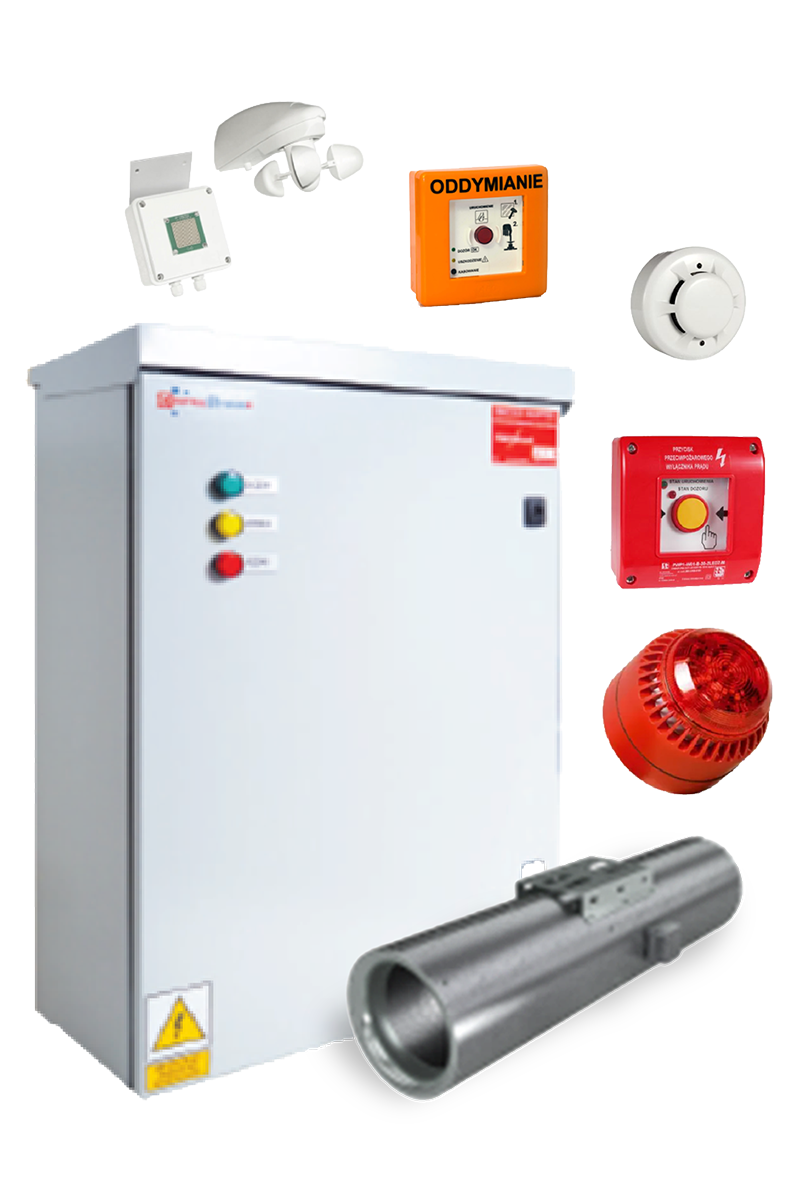
Certified Fans (F300/F400)
Ductless Car Park Systems
Design, Supply & Install
Not General HVAC Comfort
AWAK designs, specifies, supplies and installs complete mechanical smoke ventilation and smoke-control systems: smoke-extract fans, make-up air, jet fans and the associated controls, engineered to the EN 12101 family of standards. This is our focus - life-safety fire ventilation, not general comfort HVAC.
The key difference from natural smoke ventilation is that a mechanical system does not depend on heat rising to a roof vent, so it works in enclosed and underground spaces where there is no roof to vent through.
That makes mechanical smoke extraction the right choice for underground and multi-storey car parks, escape stairs, deep-plan interiors and basements - anywhere natural NSHEV alone cannot keep escape routes clear.
Dedicated Fire-Safety Focus:
Engineered entirely for life-safety smoke clearance and toxic gas control rather than general comfort heating or cooling.
Specialised sub-systems engineered for complex building geometries and severe fire safety demands.
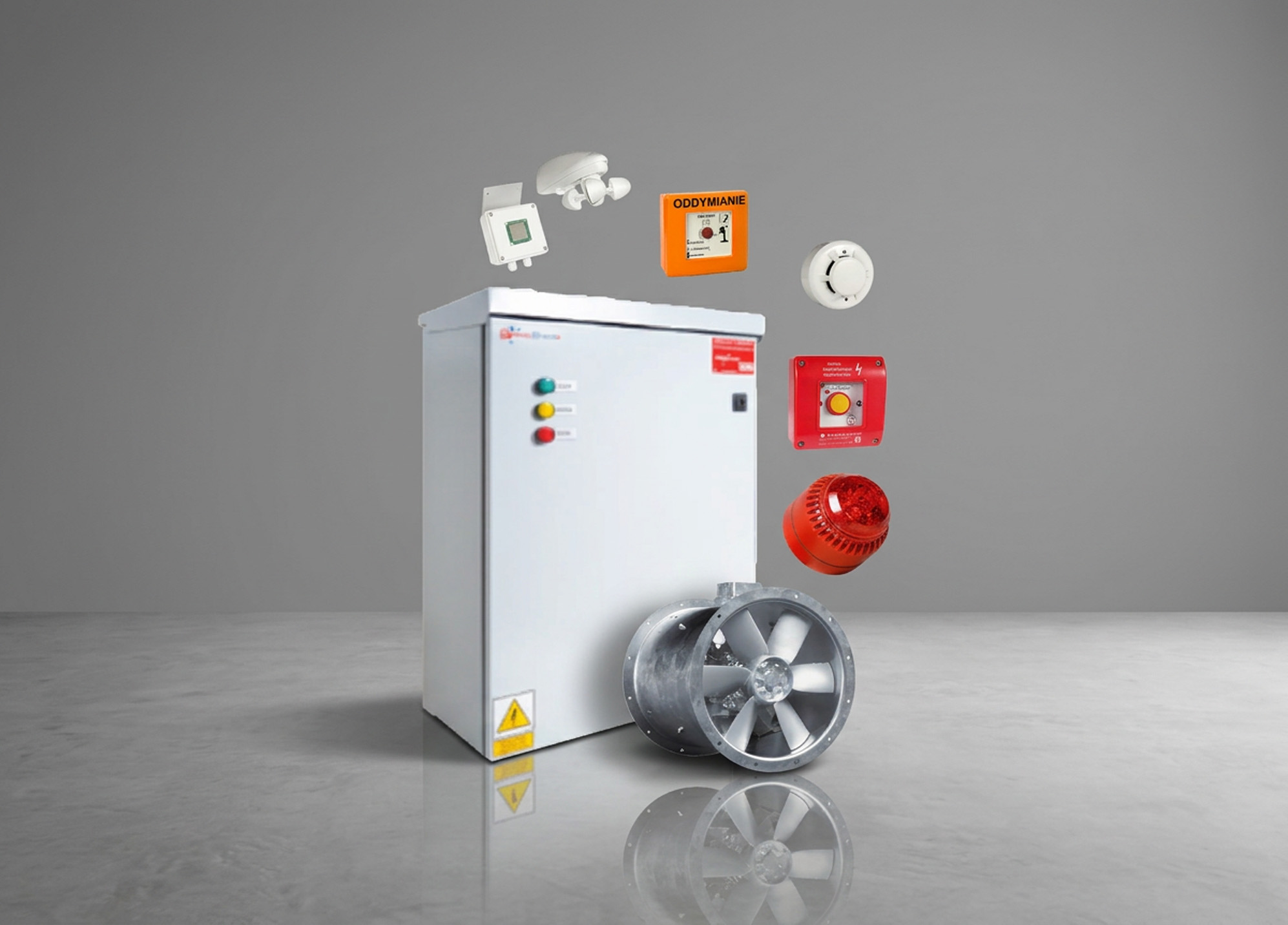
Powered smoke-extraction systems - smoke-extract fans plus make-up air - for halls, warehouses, commercial buildings and stairwells, sized to keep escape routes tenable in a fire.
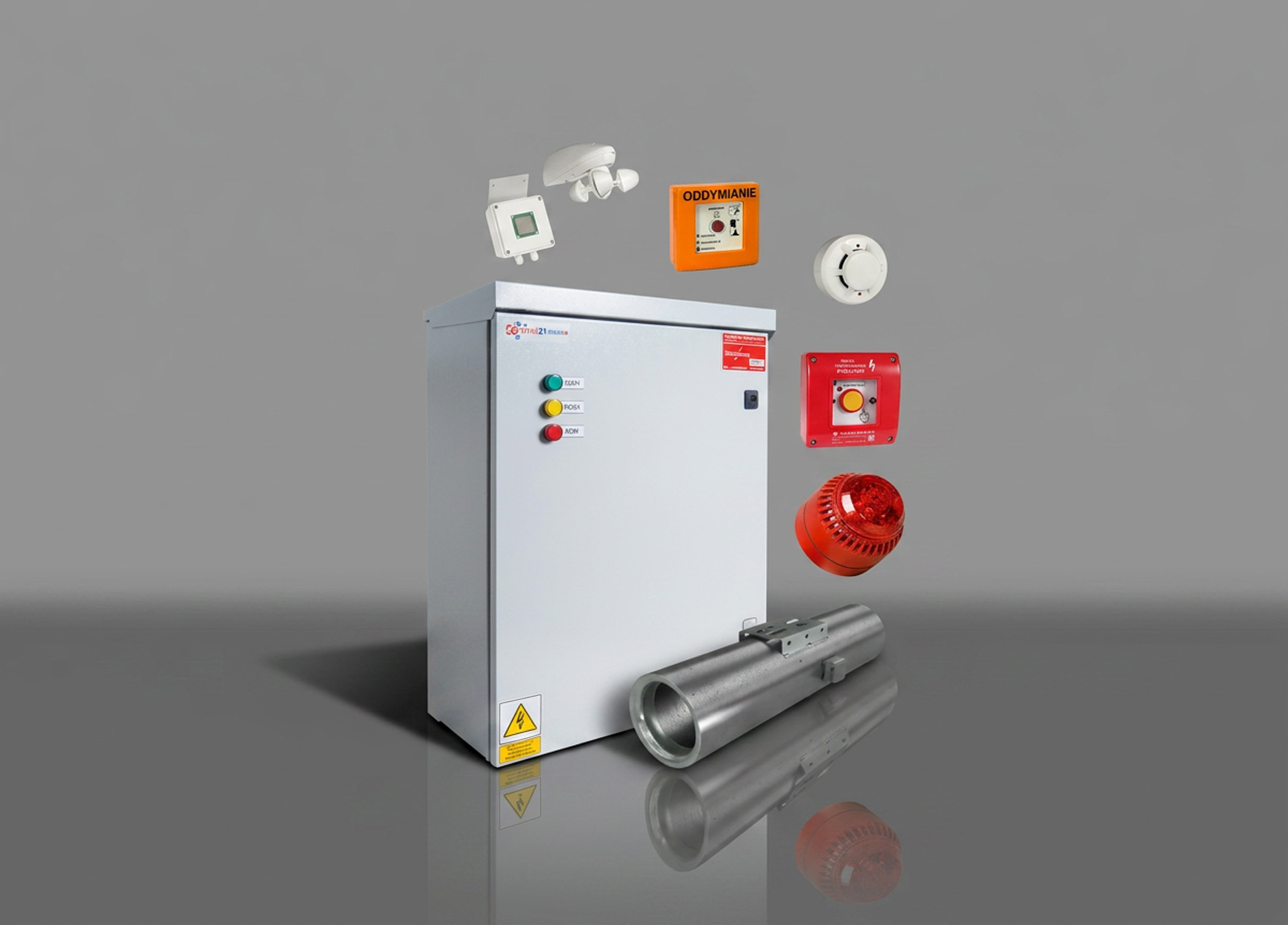
Jet-fan (ductless) and ducted ventilation for underground and enclosed car parks - day-to-day fume control with CO detection, plus smoke clearance in a fire.
The choice between mechanical and natural smoke ventilation comes down to one question: is there a roof to vent through, and will buoyancy alone move enough smoke?
Natural smoke and heat exhaust ventilation (NSHEV) uses roof-mounted smoke vents and thermal buoyancy - simple, robust and power-independent once opened, and ideal for single-storey halls and warehouses. Mechanical smoke extraction uses powered fans to drive smoke out, and is needed where natural ventilation cannot perform: enclosed or underground spaces, buildings with no usable roof area, tall or deep-plan floors, and stairs that must be kept clear by pressurisation. Many buildings use both - natural vents over the halls, mechanical systems in the car park and cores. Because AWAK supplies both, the recommendation is driven by the building and the fire strategy, not by what we happen to sell.
Whichever approach is chosen, both depend on a supply of replacement (make-up) air to work.
Natural systems draw make-up air in at low level through doors, louvres or inlet vents; mechanical systems can also supply it through fans and ducts. Getting this inlet provision right is as important as the extract itself - without enough make-up air, neither a natural nor a mechanical system can move its design smoke volume. AWAK sizes the extract and the inlet together, as one balanced system.
Car park ventilation has two jobs: clearing vehicle fumes (notably carbon monoxide) day to day, and extracting smoke to keep escape routes and access clear in a fire.
Enclosed and underground car parks cannot rely on natural airflow, so a mechanical system is required.
Ductless induction fans sweep air across the car park toward extract points, freeing up soffit height and removing most ductwork. Flexible to lay out and efficient to run.
A network of supply and extract ducts distributes airflow, suited to layouts where jet fans are impractical.
CO detection controls the everyday duty, running the fans only when pollutant levels demand it, which saves energy; in fire mode the same system switches to smoke clearance. AWAK designs car park ventilation to the relevant fire-safety and smoke-control standards and selects the fans, controls and detection to suit the geometry of the specific car park.
A mechanical smoke extraction system is designed around the volume of smoke to be removed, so the extract fans and make-up air together keep a tenable layer for escape and firefighting.
The engineering follows a clear sequence: define the design fire and the smoke it produces; set the tenability criteria (clear-layer height, visibility, temperature); size the smoke-extract fans to remove smoke at that rate; provide matching make-up (replacement) air at low level so the extract can work; and specify fans, dampers and controls rated to operate at elevated temperature for the required duration. The system is integrated with fire detection so it starts automatically, and is commissioned and tested to prove performance. AWAK’s engineers carry out this design and equipment selection as part of a single supply-and-install package.
The powered equipment itself is certified to EN 12101-3, the standard for smoke and heat exhaust fans.
Each smoke extract fan carries a temperature/time class - for example F300 or F400, meaning it keeps running at 300 °C or 400 °C for the rated period - so the fan continues to move smoke as the fire develops. Alongside the fans, AWAK selects the smoke-control dampers, ductwork and dedicated power supplies needed to match the design duty and the required fire rating.
Mechanical smoke ventilation is governed by the EN 12101 family of standards, which sets separate requirements for each part of a smoke control system.
Knowing which part applies to which component makes it far easier to write a compliant specification.
Natural smoke and heat exhaust ventilators (roof smoke vents used in natural systems).
Powered smoke and heat exhaust ventilators (smoke extract fans), classified by temperature/time (e.g. F300/F400).
Pressure differential systems that keep escape stairs and lobbies clear of smoke by pressurisation.
Smoke control dampers that direct extraction to the fire zone.
Power supplies that keep the system running throughout a fire emergency.
AWAK works to these standards across both natural and mechanical systems, and our engineers confirm the exact classes required for your building as part of the design - so the specification, the equipment and the fire strategy all line up.
A jet fan ventilation system works like a chain of small impulse fans that push air across a car park in a controlled direction, moving fumes or smoke to extract points without a full duct network.
Each jet (induction) fan entrains and accelerates the surrounding air, and a line of them creates a continuous airflow from the supply openings to the extract fans. Because the ducts are largely eliminated, jet-fan systems free up valuable headroom, are quicker to install and can be zoned to direct smoke away from the escape route nearest a fire. Controlled by CO detection for daily running and by the fire system for smoke clearance, they are a common choice for underground and enclosed car parks - and one of the mechanical ventilation systems AWAK designs and supplies.
Everything you need to know about mechanical smoke ventilation and car park systems.
Mechanical smoke ventilation uses powered fans to actively extract smoke and heat from a building in a fire, rather than relying on smoke rising naturally to roof vents. It is used where natural ventilation cannot work - underground car parks, escape stairs, deep-plan and enclosed spaces. AWAK designs and installs these systems to the EN 12101 family of standards.
When there is no usable roof to vent through, or buoyancy alone will not move enough smoke - for example in underground or enclosed car parks, basements, tall or deep-plan buildings, and pressurised escape stairs. Single-storey halls and warehouses are usually better suited to natural roof smoke vents. AWAK supplies both and can advise on the right approach.
Jet-fan (impulse) systems use ductless induction fans to sweep air across the car park toward extract points, saving headroom and most ductwork; ducted systems distribute airflow through supply and extract ducts. The best choice depends on the car park geometry - our engineers will recommend and size the system.
No. AWAK specialises in mechanical smoke ventilation and fire-safety ventilation - smoke extraction, smoke control and car park ventilation - not general comfort heating, cooling or air conditioning.
Yes. We deliver the design, equipment selection, supply and installation of mechanical smoke ventilation systems under one contract - a single point of responsibility from concept to commissioning, with documentation and after-sales servicing.
Talk to our engineers for a free consultation.